An Unforgettable Spiritual Journey through the Himalayas
Duration
18 Days
Activity
Trekking
Max. Altitude
5160
Difficulty
Moderate
The Manaslu Trek via Serang Gompa is moderately to highly challenging. It involves 6 to 8 hours of daily trekking on steep, rocky, and remote trails with high altitude passes. Trekkers need good fitness and prior trekking experience to handle rugged terrain and changing mountain conditions.
Starts
Kathmandu
Ends
Kathmandu / Pokhara
Group Size
1 Pax
Best Season
Mar-May, Sep-Nov
Highlights
Visit Serang Gompa, an ancient monastery in the Kyimolung Valley.
See Mt. Manaslu and other peaks like Ganesh Himal and Himlung.
Cross the Larkya La Pass (5,160m) with breathtaking scenery.
Walk through rivers, forests, waterfalls, and high alpine valleys.
Explore remote Tibetan influenced villages like Lho and Samagaon.
Visit Birendra Lake and Pungyen Gompa on side trips.
See Himalayan wildlife such as blue sheep and, rarely, snow leopards.
Experience Buddhist rituals, chanting, and local traditions.
Stay in teahouses and taste authentic Dal Bhat and Tibetan food.
The best trekking seasons are March to May and September to November.
TRIP OVERVIEW
“Manaslu Trek via Serang Gompa: An Unforgettable Spiritual Journey through the Himalayas “
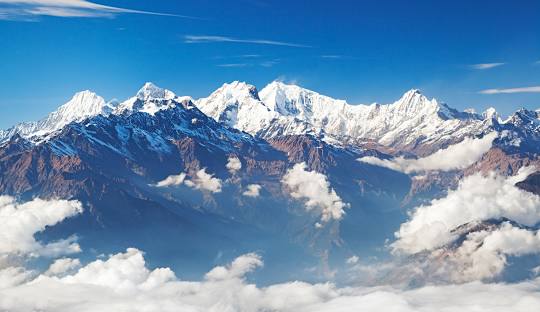
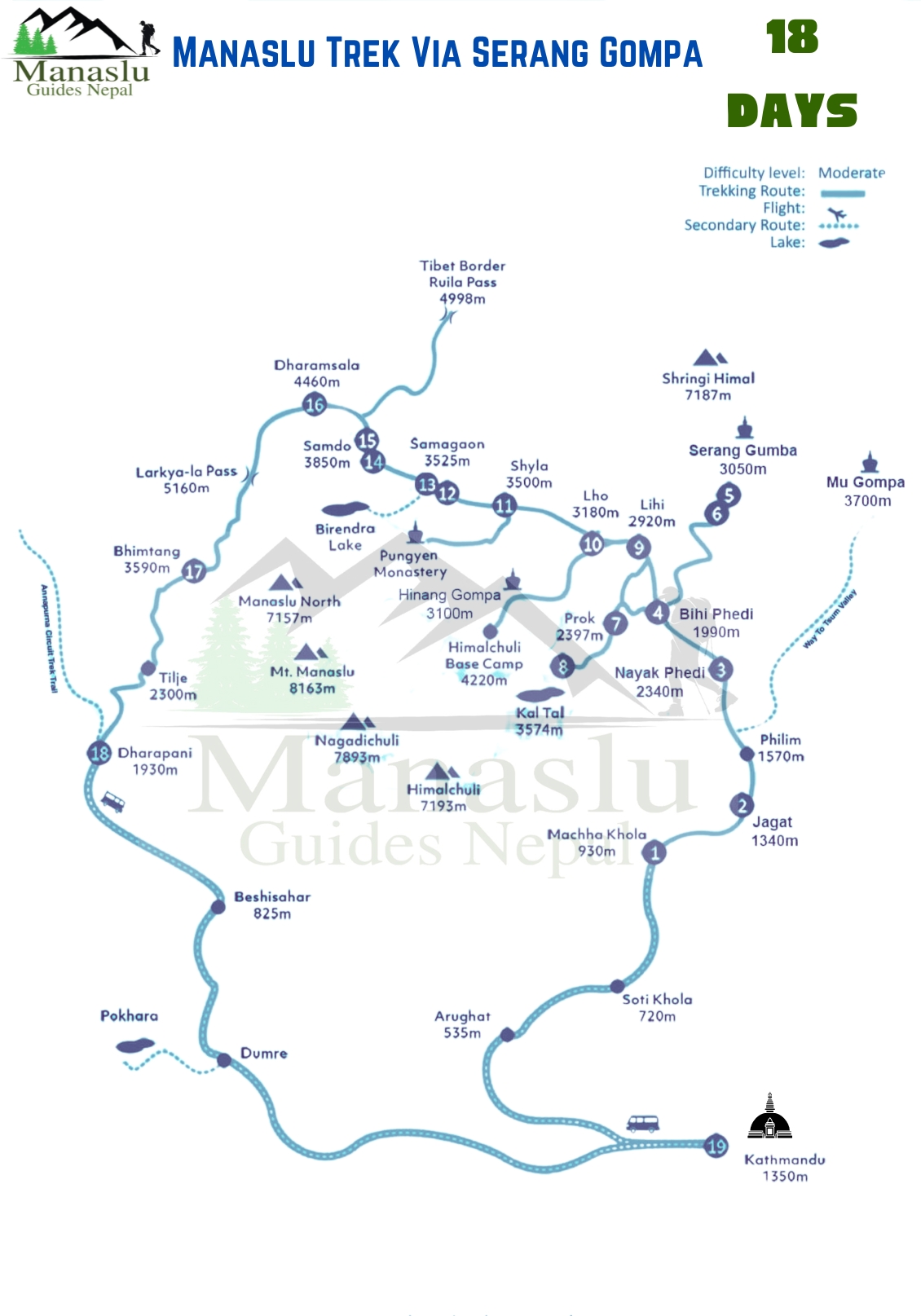
The Manaslu Trek via Serang Gompa is a captivating 18-day journey through the remote and pristine landscapes of the Manaslu region in Nepal. This trek offers a unique opportunity to explore the raw beauty of the Himalayas while immersing yourself in the rich cultural heritage of the local communities. As you trek along this less-traveled route, you will encounter traditional villages, Buddhist monasteries, and terraced fields, providing a glimpse into the authentic way of life in the region. The stunning views of snow-capped peaks, including the majestic Mount Manaslu, further enhance the allure of the Manaslu, making it a paradise for nature lovers and adventure enthusiasts.
One of the highlights of the Manaslu Trek via Serang Gompa is the challenging yet exhilarating crossing of the Larkya La pass at an altitude of 5,160 meters. This high mountain pass presents a thrilling adventure for trekkers, rewarding them with panoramic views of the surrounding Himalayan peaks and glaciers. The sense of accomplishment and the breathtaking vistas from the top of Larkya La pass make the effort and endurance required to reach this point truly worthwhile. The rugged terrain and the high altitude add an element of excitement and challenge to the Manaslu Trek via Serang Gompa, offering a unique and unforgettable experience for trekkers seeking a more demanding Himalayan adventure.
In addition to the natural beauty and physical challenge, the Manaslu Trek via Serang Gompa also provides an opportunity for cultural exchange and interaction with the welcoming local communities along the way. The warm hospitality of the villagers, coupled with their traditional lifestyles and age-old customs, offer a fascinating insight into the cultural tapestry of the region. From participating in local festivals to staying in homestays and enjoying authentic Nepalese cuisine, trekkers can forge lasting memories and connections with the people of Manaslu, making this trek a truly enriching and immersive experience.
Why Serang Gompa be included in Manaslu Trek?
Because of its peaceful and beautiful location in the Kyimooung Valley, Serang Gompa is a particular attraction for trekkers doing the Manaslu Trek.Serang Gompa is a peaceful haven with stunning views of the Mountains and a variety of landscapes, all while being removed from the busy trekking routes. The climb to Serang Gompa usually begins at Sotikhola and takes hikers six to seven hours to reach its nearest village, Bihi Village.
Beyond its breathtaking natural beauty, the region around Serang Gompa has great cultural value since it is one of the four beyuls, or secret valleys, that the locals hold in high regard. This gives the hike a mysterious quality while providing not just a breathtaking landscape but also an insight into the region’s rich cultural history. Trekkers visiting Serang Gompa in the Manaslu region are guaranteed a profound and unforgettable experience, whether they are there for spiritual reflection or just to take in the unspoiled beauty of the surroundings.
Best Time and Season for Manaslu Trek via Serang Gompa
Choosing the best time to trek in the Manaslu region via Serang Gompa is very important to have a fun and safe adventure. Every season has its own unique experiences and challenges that can affect your trek. Knowing what to expect in each season will help you plan and prepare well for this amazing journey in the Himalayas.
Spring (March through May):
This is the ideal season to start the Manaslu Trek via Serang Gompa. This is the best time of year or trek in the region because of the clear skies, moderate temperatures, and blossoming rhododendrons. The pathways are alive with color, and the views of the mountains covered with snow are breathtaking. Wonderful trekking conditions are created by the generally stable weather and easier access to the high passes than during the winter.
Summer/Monsoon (June to August):
The summer months bring the monsoon season to the region, resulting in heavy rainfall and the possibility of landslides and leech infested trails. The Manaslu Trek via Serang Gompa can be challenging and slippery during this time, making trekking in the Manaslu region less favorable. However, the lush greenery and fewwer trekkers on the trail can appeal to some adventurers seeking a more solitary experience, though caution and readiness for the wet conditions are essential.
Autumn (September to November):
Autumn is considered the peak trekking season in the Manaslu region. The weather is stable with clear skies, providing outstanding visibility of the dramatic mountain vistas and landscapes. The colorful foliage and comfortable temperatures create a picturesque backdrop for trekking. The trails are bustling with trekkers, and the local villages are vibrant with festive celebrations, offering an immersive cultural experience along with the natural beauty.
Winter (December to February):
Winter brings cold temperatures and the possibility of heavy snowfall to the Manaslu region. The higher altitudes and the Larkya La Pass can be particularly challenging during this season due to the harsh weather conditions. However, the winter months also offer a pristine and tranquil environment, with crystal clear views and fewer crowds on the trails, providing a serene and more intimate trekking experience for those prepared for the cold and snowy conditions.
Culture in Manaslu Trek via Serang Gompa
The Manaslu Trek via Serang Gompa offers an opportunity to fully engage with the region’s diverse cultural heritage, especially when traveling via Serang Gompa. Trekkers can interact with the local people and observe their traditional way of life as they make their way towards Serang Gompa through the Kyimooung Valley. The hike route towns offer an insight into the distinct traditions, everyday routines, and architectural styles of the people residing in this isolated area.
Serang Gompa is a prominent cultural site that frequently hosts festivals, ceremonies, and rituals, providing insight into the spiritual customs of the region. In addition to learning about Tibetan Buddhism and gaining insight into the religious traditions that have influenced the lives of the people for generations, visitors can also have the opportunity to meet with monks. Travelers seeking a deeper connection with the Himalayan culture will find that the Serang Gompa excursion on the Manaslu Trek is a genuinely enriching and memorable experience because of this cultural interchange and the breathtaking natural beauty of the environment.
Flora and Fauna
The Manaslu region, especially along the Serang Gompa route, is known for its rich variety of plants and animals. As you trek through different altitudes, you’ll walk through thick forests filled with rhododendron, pine, and oak trees. These forests are home to many birds, such as the Himalayan monal and blood pheasant, making it a great spot for bird lovers. During the spring, the landscape comes alive with colorful alpine flowers, turning the area into a beautiful, vibrant scene.
As you climb higher, the forests change into open meadows and rocky areas where rare animals like snow leopards, Himalayan Thar, and blue sheep live. Conservation efforts in the Manaslu region help protect these animals, giving trekkers a chance to see them in the wild. The different ecosystems, from warm forests to cold alpine zones, make the Manaslu Trek via Serang Gompa a special journey where you can experience nature in all its forms.
Food and Accommodation
Food and accommodation on the Manaslu Trek via Serang Gompa are simple yet comfortable, designed to meet the needs of trekkers. Local teahouses and lodges along the route serve meals like dal bhat (rice and lentils), noodles, soups, and Tibetan bread. These meals give you the energy needed for the long days of trekking and are often made from local ingredients. Many places also offer vegetarian dishes and basic snacks to keep you energized. Manaslu Guides will help arrange the best food options, ensuring you get nutritious meals throughout the journey.
The accommodation is basic but clean, with teahouses providing rooms that usually have twin beds, blankets, and shared bathrooms. While higher altitudes offer fewer facilities, the kindness and hospitality of the local people make the experience warm and welcoming. As you get closer to remote areas like Serang Gompa, the teahouses become more simple, but they still provide a cozy place to rest after trekking. Manaslu Guides will assist in arranging the best available accommodation, ensuring that you have a comfortable stay. We will also make sure you get proper rest and nutrition to keep you prepared for each day’s adventure.
Difficulty in Manaslu Trek via Serang Gompa
The Manaslu Trek via Serang Gompa is considered moderate to challenging for trekkers. The trail has varied terrain, featuring steep climbs and descents that can be quite demanding on your body. Some sections are narrow and rocky, requiring careful walking. Additionally, trekkers will reach altitudes over 5,000 meters, which can cause altitude sickness if you don’t acclimatize properly.
Weather can also make the Manaslu trek via Serang Gompa more difficult. Rain and snow are possible, especially at higher elevations, which can make the trails slippery and reduce visibility. It’s important to be ready for sudden changes in weather and to have the right gear. Despite these challenges, the Manaslu trek via Serang Gompa rewards you with breathtaking views and a memorable experience. Being well-prepared, maintaining good physical fitness, and having guidance from experienced locals, such as those from Manaslu Guides, can help ensure that your trek is both manageable and enjoyable. This preparation will allow you to fully appreciate the stunning landscapes and cultural richness of the region.
Permits For Manaslu Trek via Serang Gompa
To trek the Manaslu trek via Serang Gompa, you need several permits for a safe and legal journey. First, you must obtain the Manaslu Restricted Area Permit (RAP). This permit is required for all trekkers in this region and helps protect the local environment and culture. You can only get this permit through a registered trekking agency, such as Manaslu Guides.
You will also need an Annapurna Conservation Area Permit (ACAP), as parts of the trek may fall within this area. Like the RAP, this permit must be arranged through a registered agency. It’s important to have all your permits ready before you start the trek because there are checks along the trail. Manaslu Guides will assist you in getting these permits, ensuring all your paperwork is properly managed. With their help, you can focus on enjoying the breathtaking landscapes and unique experiences that await you on the Manaslu trek via Serang Gompa. Their expertise will make the process smooth and stress-free.
Packing List For Manaslu Trek via Serang Gompa
Clothing
Base Layers: Quick-drying shirts and thermal underwear.
Insulating Layer: A warm fleece or down jacket.
Outer Layer: A waterproof and windproof jacket and pants.
Trekking Pants: Lightweight, quick-drying pants.
Hat and Gloves: A warm hat and gloves or mittens.
Socks: Wool or synthetic hiking socks (bring extra pairs).
Trekking Boots: Strong, comfortable boots that are already broken in.
Gaiters: To keep dirt and water out of your boots.
Sun Hat: A wide-brimmed hat for sun protection.
Lightweight Sleepwear: Comfortable clothing for teahouse stays.
Gear
Sleeping Bag: Warm sleeping bag rated for cold temperatures.
Backpack: A comfortable backpack (50-70 liters).
Trekking Poles: For better balance on rocky paths.
Headlamp: With extra batteries for nighttime.
Water Bottle: Reusable, insulated bottles or a hydration pack.
First Aid Kit: Basic medical supplies, including altitude sickness meds.
Optional Items
Portable Charger: For charging devices.
Travel Guidebook: For extra tips and information.
Book or Journal: For relaxation during breaks.
Accessories
Sunglasses: UV protection for high altitudes.
Sunblock: High SPF for your skin.
Lip Balm: With SPF to prevent chapping.
Multi-tool: Useful for different tasks.
Camera: To take photos of the beautiful scenery.
Personal Items
Toiletries: Biodegradable soap, toothbrush, and toothpaste.
Towel: A quick-dry travel towel.
Snacks: Energy bars, nuts, and dried fruits for extra energy.
Cash: Local currency for small purchases along the way.
Adjust this list based on what you need and the season you’ll be trekking. Manaslu Guides can also give you more tips on what to pack, ensuring you’re ready for your adventure.
Why Manaslu Guides For this Trek?
Local Expertise: Knowledgeable guides familiar with the terrain, weather, and culture of the region.
Safety and Navigation: Enhanced safety through experienced navigation of challenging trails.
Permit Assistance: Help with obtaining all necessary permits and handling logistics.
Personalized Support: Tailored services to meet your specific needs and preferences.
Accommodation and Meals: Assistance in arranging suitable lodging and meal options.
Cultural Insights: Opportunities to learn about local traditions and customs.
Stress-Free Experience: Focus on enjoying the trek while they manage the details.
Reliable Support: Ongoing assistance throughout your journey, ensuring a smooth adventure.
Itinerary
Expand AllCollapse
All
DAY 01
Drive from Kathmandu to Machhakhola (870m/2,952ft)
Your journey starts with a drive from Kathmandu to Machhakhola. The drive offers scenic views as you pass through hills, rivers, and small villages along the way. You will travel along the Prithvi Highway before heading towards Arughat and finally reaching Machhakhola, a small settlement along the Budhi Gandaki River.
This day is a long travel day, covering approximately 8-9 hours by jeep or bus. You’ll enjoy the lush countryside and get a sense of the rural landscape before reaching Machhakhola, which serves as a starting point for trekking in the Manaslu region.
After an early breakfast in Macchakhola, your trek begins along the Budhi Gandaki River. The trail is filled with up-and-down terrain as you pass through small settlements like Khorla Besi and Tatopani, where you can take a short break to enjoy the natural hot springs.
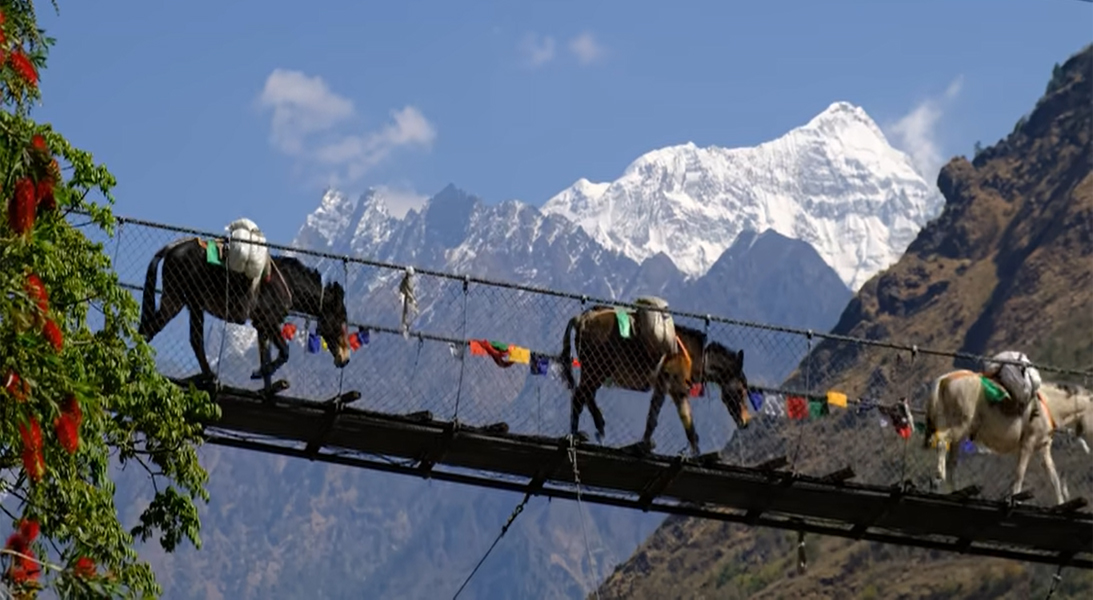
The path continues through forests and over suspension bridges before reaching the village of Dobhan. From there, you ascend gradually to Jagat, a charming village known for its stone-paved streets and stunning views of the surrounding hills. Jagat also marks the entry checkpoint for the Manaslu Conservation Area.
Max. Altitude: 2,340m/ 7,676ftBreakfast / Lunch / DinnerTea house / Lodge3-4 hrs walk
DAY 03
Trek from Jagat to Deng (1,860m/6,102 ft)
Route: Jagat – Salleri – Sirdibas – Philim – Ekle Bhatti – Deng
Max Altitude: 1,860m / 6,102ft
Distance: 20 km (approx.)
Duration: 6–7 hours trek
Meal: Breakfast / Lunch / Dinner
Accommodation: Tea House / Lodge
Starting your day from Jagat, the trail ascends through lush forests and terraced fields. You’ll pass through villages like Salleri and Sirdibas, enjoying stunning views of the surrounding landscapes and local life. After crossing a long suspension bridge at the village of Philim, the path gradually heads into a gorge with waterfalls and river crossings.
The trek continues with scenic walks through bamboo forests, leading to the small village of Deng. Along the way, you’ll notice changes in culture and scenery, with Tibetan influences becoming more prominent as you move deeper into the Manaslu region.
Route: Deng – Rana – Bhi Phedi – Kwak Village
Max Altitude: 3,200m
Distance: 17 km (approx.)
Duration: 6–7 hours trek
Meal: Breakfast / Lunch / Dinner
Accommodation: Tea House / Lodge
Your trek continues from Deng, following the trail that winds along the Budhi Gandaki River. The path gradually ascends as you pass through forests and cross bridges, heading towards the village of Bhi Phedi. The trail offers stunning views of the surrounding mountains and deep valleys.
After reaching Bhi Phedi, the trek becomes steeper, with a challenging ascent toward Kwak. As you climb, the landscape begins to change, with alpine forests and glimpses of snow-capped peaks becoming more frequent. Kwak is a small village, less frequented by trekkers, making it a peaceful stop along the route.
Leaving Kwak, the trail ascends steadily through alpine forests, offering breathtaking views of the mountains as you trek toward the serene Serang Gumba. The trek becomes more challenging as you gain altitude, but the incredible surroundings and peaceful atmosphere make it worthwhile.
Upon reaching Serang Gumba, you’ll be welcomed by the local monks and stay at the monastery, offering a unique opportunity for cultural immersion. The monastery, situated at 4,130 meters, provides a tranquil retreat and panoramic views of the surrounding snow-capped peaks.
Max. Altitude: 5,160MBreakfast / Lunch / DinnerTea house / Lodge5-6 hrs walk
DAY 06
Leisure Day in Serang Gumba
Route: Explore Serang Gumba Monastery and nearby village
Max Altitude: 4,130m
Meal: Breakfast / Lunch / Dinner
Accommodation: Tea house / Lodge
After days of trekking, take a well-deserved rest at Serang Gumba. This leisure day allows you to explore the serene monastery and its surroundings. You can spend time interacting with the monks, learning about their daily routines, meditation practices, and the history of the monastery.
Take a peaceful walk around the area, enjoying panoramic views of the majestic Himalayan peaks. This day at Serang Gumba provides not only physical rest but also a spiritual and cultural experience, deepening your connection with the local Tibetan-Buddhist traditions at this altitude of 4,130 meters (13,550 feet).
Max. Altitude: 5,160MBreakfast / Lunch / DinnerTea house / Lodge 5-6 hrs walk
You begin the descent from Serang Gumba, retracing your steps through alpine forests and rocky trails. The path offers stunning views of the surrounding valleys and mountain ranges as you head down towards lower altitudes.
The trail gradually leads you through remote villages and forests until you reach Ghap. This peaceful village is surrounded by lush greenery, terraced fields, and dense forests, offering a different ambiance compared to the higher altitudes. Ghap is also influenced by Tibetan culture, and you may see traditional mani walls and prayer wheels along the way.
Max. Altitude: 2,500 mBreakfast / Lunch / DinnerTea house / Lodge 3-4 hrs walk
Leaving Ghap, the trail gradually ascends through dense forests of rhododendron and oak, following the Budhi Gandaki River. Along the way, you’ll pass several small settlements and cross wooden bridges, enjoying the peaceful atmosphere and occasional glimpses of wildlife. As you trek higher, the landscape begins to open up, offering panoramic views of the surrounding peaks.
Upon reaching Lho, you’ll be rewarded with stunning views of Mt. Manaslu. The village is known for its beautiful monastery, Ribung Gompa, which overlooks the settlement. You can visit the monastery and explore the village, where Tibetan culture and traditions are strongly evident.
Max. Altitude: 3,180m /10,433ftBreakfast / Lunch / DinnerTea house / Lodge 8-9 hrs walk
DAY 09
Trek From Loho to Samagaun (3,520 m/11,548 ft.)
Route: Lho – Shyala – Sama Village – Samagaun
Max Altitude: 3,520m / 11,548ft
Distance: 8 km (approx.)
Duration: 3–4 hours trek
Meal: Breakfast / Lunch / Dinner
Accommodation: Tea House / Lodge
The trek from Lho to Samagaun offers stunning scenery as you gradually ascend through forests and along mountain trails. The trail passes through the picturesque Shyala village, where you’ll be surrounded by panoramic views of peaks such as Manaslu, Himal Chuli, and Ngadi Chuli.
As you continue, the trail becomes more open, offering incredible vistas of glaciers and towering mountains. Samagaun, a large village at the base of Mt. Manaslu, is a hub for trekkers. The village is rich in Tibetan culture, with traditional houses, prayer wheels, and mani walls. You can explore the village and visit the ancient Pungyen Monastery, or take in the majestic views of Manaslu.
Max. Altitude: 3,520 m/11,548 ftBreakfast / Lunch / DinnerTea house / Lodge 8-9 hrs walk
DAY 10 and 11
Acclimatization day in Samagaun (3,520 m/11,548 ft.).
Route: Short hikes to Birendra Lake or Pungyen Gompa
Max Altitude: 4,800m (Manaslu Base Camp)
Distance: 10–14 km (optional hikes)
Duration: 5–6 hours (optional hike)
Meal: Breakfast / Lunch / Dinner
Accommodation: Tea House / Lodge
These two days are crucial for acclimatizing to the higher altitudes before proceeding further. Samagaun offers several rewarding side trips and experiences to help your body adjust while enjoying the local culture and stunning surroundings.
On Day 10, you can hike to Manaslu Base Camp (4,800 meters), which takes around 6-7 hours. The hike provides breathtaking views of glaciers, mountains, and the base of the majestic Mt. Manaslu. Alternatively, you can visit the nearby Birendra Lake, a beautiful glacial lake, which is a shorter hike for a more relaxed day.
On Day 11, you might explore the Pungyen Gompa (4,060 meters), a secluded monastery offering tranquil surroundings and panoramic views of the surrounding peaks. This hike takes about 5-6 hours and provides more insight into the region’s Buddhist culture.
Max. Altitude: 3,520 m/11,548 ftBreakfast / Lunch / DinnerTea house / Lodge7-8 hours walk
DAY 12
Samagaun to Samdo (3850m)
Route: Samagaun – Kermo Kharka – Samdo Village
Max Altitude: 3,875m / 12,713ft
Distance: 10 km (approx.)
Duration: 4–5 hours trek
Meal: Breakfast / Lunch / Dinner
Accommodation: Tea House / Lodge
After acclimatizing in Samagaun, the trek continues with a gradual ascent to Samdo. The trail is relatively easy as it follows the Budhi Gandaki River through open, wide valleys, offering impressive views of the surrounding mountains. Along the way, you’ll pass yak pastures and sparse settlements, as the landscape becomes more rugged and remote.
Samdo is a small village located just a few kilometers from the Tibetan border. It is home to a large Tibetan refugee community and is rich in cultural heritage. Once you arrive, you can explore the village and take in the spectacular views of Mt. Manaslu and other nearby peaks. Samdo is also the last village before the Larkya La Pass, making it an important stop for rest and preparation.
Max. Altitude: 3,875 m/12,713 ftBreakfast / Lunch / DinnerTea house / Lodge7-8 hrs walk
DAY 13
Another extra day in Samdo
Route: Explore Samdo village and Tibetan border area
Max Altitude: 4,200m (viewpoint)
Distance: 6–8 km (optional)
Duration: 3–4 hours trek
Meal: Breakfast / Lunch / Dinner
Accommodation: Tea House / Lodge
This extra day in Samdo allows further acclimatization before crossing the high-altitude Larkya La Pass. You can spend the day exploring the surrounding areas and enjoying the peaceful atmosphere of this remote village.
One popular option is to take a short hike up towards the Tibetan border or explore the ridge above Samdo, which offers panoramic views of the Himalayas and the Tibetan plateau. This trek also provides great opportunities to observe local wildlife like blue sheep and birds of prey.
The additional day in Samdo not only helps your body adjust to the altitude but also gives you the chance to immerse yourself in the unique Tibetan-influenced culture of this region.
Max. Altitude: 3,875 m/12,713 ftBreakfast / Lunch / DinnerTea house / Lodge 3 hrs walk
The trek from Samdo to Dharmasala (also known as Larkya Phedi) is a shorter but important day, as you continue ascending towards higher elevations. The trail climbs gradually, passing through barren landscapes, yak pastures, and alongside glacial moraines. The scenery becomes more rugged and dramatic as you approach Dharmasala.
Dharmasala is the last stop before crossing the Larkya La Pass. It consists of a small settlement with basic lodges where trekkers rest before tackling the pass. You will arrive early enough to rest, prepare for the challenging next day, and enjoy the stunning mountain views surrounding the campsite.
Route: Dharmasala – Larke La Pass – Bhimtang
Max Altitude: 5,160m / 16,929ft (Pass), 3,590m / 11,778ft (Bhimtang)
Distance: 16 km (approx.)
Duration: 8–9 hours trek
Meal: Breakfast / Lunch / Dinner
Accommodation: Tea House / Lodge
This is the most challenging and rewarding day of the trek, as you cross the famous Larkya La Pass. The day begins early with a gradual ascent from Dharmasala, with the path becoming steeper and more rugged as you approach the pass. The high altitude and cold temperatures make this section demanding, but the spectacular views of peaks like Himlung, Cheo Himal, Kang Guru, and Annapurna II make the effort worthwhile.
Reaching the top of Larkya La Pass (5,160 meters), you are greeted by stunning panoramic views of the surrounding snow-capped mountains. After a brief rest and photo opportunities at the top, you’ll begin a long descent to Bhimthang. The descent is steep at first, passing through rocky terrain, and eventually leading into lush forests as you drop in altitude.
Bhimthang is a beautiful valley surrounded by towering peaks, offering a well-deserved rest after the challenging trek.
Max. Altitude: 3,590m/11,778 Ft (Larke- 5,106m/ 16,751 ft.)Breakfast / Lunch / DinnerTea house / Lodge 6-7 hrs walk
DAY 16
Trek from Bhimthang to Tilje
Route: Bhimtang – Yak Kharka – Gho Village – Tilje
Max Altitude: 2,300m / 7,546ft
Distance: 20 km (approx.)
Duration: 7–8 hours trek
Meal: Breakfast / Lunch / Dinner
Accommodation: Tea House / Lodge
After a restful night in Bhimthang, the trek continues with a descent through lush forests of rhododendron and pine. The trail follows the Dudh Khola River, offering beautiful views of the surrounding valleys and mountain ranges. As you descend, the landscape transitions from alpine terrain to more temperate environments, with rivers, streams, and waterfalls along the way.
You will pass through small villages like Karche and Gho before reaching Tilje, a larger settlement surrounded by terraced fields. Tilje is a charming village where you can witness local Gurung culture and enjoy the peaceful surroundings.
Max. Altitude: 2,300 m/7,546 ftBreakfast / Lunch / DinnerTea house / Lodge - 2/3 Stars Hotel8-9 hrs walk
DAY 17
Trek from Tilje to Tal Village.
Route: Tilje – Dharapani – Karte – Tal Village
Max Altitude: 1,860m / 6,102ft
Distance: 14 km (approx.)
Duration: 6–7 hours trek
Meal: Breakfast / Lunch / Dinner
Accommodation: Tea House / Lodge
The trek from Tilje to Tal Village involves a pleasant descent, continuing through forests, crossing suspension bridges, and passing charming villages. The trail follows the Marsyangdi River, with scenic views of waterfalls and terraced fields. As you descend further, the climate becomes warmer and the vegetation more lush.
After passing through Dharapani, the trail leads to Tal, a beautiful village situated on the banks of the Marsyangdi River. Tal is known for its wide, flat valley surrounded by high cliffs, with a tranquil waterfall adding to the picturesque atmosphere.
Max. Altitude: 1,860 m (6,100 ft)Breakfast / Lunch / DinnerTea house / Lodge 6-7 hrs walk
DAY 18
Drive by Jeep from Tal to Besisahar and Back to Kathmandu or Pokhara.
Route: Tal – Chamje – Syange – Besisahar – Kathmandu / Pokhara
Max Altitude: Kathmandu (1,400m / 4,593ft) / Pokhara (822m / 2,697ft)
Distance: 35 km (Tal to Besisahar) + 175 km (to Kathmandu) / 125 km (to Pokhara)
Duration: 6–8 hours drive
Meal: Breakfast
Accommodation: 2/3 Star Hotel
On the final day of your journey, you will take a scenic jeep ride from Tal to Besisahar. The drive descends further along the Marsyangdi River, passing through charming villages, lush hillsides, and terraced farmlands. The off-road sections add some adventure to the journey as you make your way down from the mountains.
Once you reach Besisahar, you’ll switch to a comfortable vehicle for the drive back to either Kathmandu or Pokhara, depending on your plan. The drive offers more beautiful landscapes as you reflect on the incredible trek you’ve completed.
Drive duration:
Tal to Besisahar by Jeep: 4-5 hours
Besisahar to Kathmandu or Pokhara by vehicle: 6-7 hours
Max. Altitude: 1,400m/4,593ft., Pokhara: 822 m (2,697 ft)Breakfast 2/3 Stars Hotel35 mins flight
Itinerary Note
If you’re interested in extending your adventure in Nepal, we offer a variety of exciting options. Discover the serene beauty of Pokhara, explore the wildlife in Chitwan National Park, or immerse yourself in the rich history with our Kathmandu Cultural Heritage Tours. For those looking for international experiences, we also offer tours to Tibet, India, and Bhutan.
Our standard itinerary may vary due to unforeseen circumstances like flight delays, weather changes, or health concerns. We advise arriving a day early to rest and prepare, with extra buffer days for international flights. The itinerary serves as a guideline and can be adjusted based on client preferences, fitness levels, and ground realities. If you're not satisfied or have an alternative plan please feel free to discuss it with us By Clicking :- ASK QUESTION or CUSTOMIZE YOUR TRIP.
Airport pick up and drop off by Car, jeep, Hiace or Bus. Depends on the number of arrives.
Beginning two nights stay on arrival in Kathmandu in tourist standard hotel with breakfast included (twin share basis)
Kathmandu to Machha-khola (trekking starting point) transfer by Bus, and way back from Dharapani to besisahar by jeep and from Besisahar to Kathmandu or Pokhara by tourist bus.
All necessary trekking and restricted area permit and fees, (Entry Permit, Manaslu conservation area permit, Annapurna conservation permit, Manaslu Restricted area special permit and TIMs cards).
Three meals a day during the trek (Breakfast/Lunch/Dinner)
All accommodation during trek (Tea house/guesthouse)
An experienced, English-speaking, government-licensed, first aid trained Manaslu special trekking guide and assistant guide ( 10 trekkers: 1 assistant guide)
Expert Manaslu local porters (2 trekkers: 1 porter)
Duffel bag, (to be returned after trip completion), complementary trekking maps. If needed down jacket and sleeping bag will be provided in rent.
Staff costs including their salary, insurance, Equipment, transport, food and accommodation.
Rescue arrangements if necessary.
Basic First-aid kit (carried by trekking guide)
All government and local taxes for Trekking, Agency service charge and government tax/vat.
Achievement Certificate
Cost Excludes
International airfare and Nepal visa fee.
Lunch and Dinner in Kathmandu
Extra night accommodation in Kathmandu because of early arrival, late departure, early return from mountain (due to any reason) than in the scheduled itinerary
Personal insurance which covers medical, emergency evacuation, loss or theft of property.
Personal gears and equipment.
Personal expenses such as laundry, hot showers, battery charging, Wifi, etc
Entry fees and costs in sightseeing (temples, monasteries, etc)
Tips and gratitude provided to guide and porter.
Join Fixed Departure
Fixed Departure Note
Join our group trek with a fixed departure date, or choose your own date with our Private Trip option, which offers daily availability.
Guaranteed: The trip will definitely run on this date.
Available: The trip will run once the minimum group size is met.
Limited: Only a few seats left—book soon!
Closed: No seats left for this group. Please consider a private trip.
The Manaslu Trek via Serang Gompa requires a special restricted-area trekking permit.
It is recommended to trek with a licensed guide for safety and navigation.
The best seasons for the trek are spring (March-May) and autumn (September-November) due to favorable weather conditions.
The trek typically takes around 18-20 days, depending on the route and pace.
Altitudes on the trek can exceed 5,000 meters, making proper acclimatization crucial to avoid altitude sickness.
Manaslu Guides will assist with obtaining the necessary permits and ensure a safe, well-organized trek.
Accommodations are basic teahouses, and meals are simple, especially in the more remote regions of the trek.
FAQ's
What is the best seasons for the Manaslu Trek via Serang Gompa?
The best seasons for the Manaslu Trek via Serang Gompa are spring (March to May) and autumn (September to November), when the weather is clear and trails are safer.
How difficult is the Manaslu Trek via Serang Gompa?
The Manaslu Trek via Serang Gompa is a moderate to challenging trek, with daily walks of 5 to 8 hours on rugged, steep, and sometimes icy trails. Good fitness and acclimatization are essential.
What is the highest altitude on Manaslu Trek via Serang Gompa?
The trek reaches a maximum altitude of around 5,415 meters (Bimtang or nearby passes), requiring proper acclimatization to avoid altitude sickness.
Do I need special permits for the Manaslu Trek via Serang Gompa?
Yes, you need the Manaslu Restricted Area Permit, Manaslu Conservation Area Permit (MCAP), and Annapurna Conservation Area Permit (ACAP).
How many days does the Manaslu Trek via Serang Gompa take?
The Manaslu Trek via Serang Gompa usually takes 18 to 20 days, depending on acclimatization days and walking pace.
Are guides and porters necessary for the Manaslu Trek via Serang Gompa?
Yes, since the Manaslu region is restricted, you must trek with a licensed guide. Porters are optional but highly recommended for comfort and safety.
What kind of accommodation is availabel in the Manaslu Trek via Serang Gompa?
Most of the trek has teahouses offering basic rooms and local food. Around Serang Gompa, lodging is very simple and limited.
Can I do the Manaslu Trek via Serang Gompa trek solo?
No, solo trekking is not allowed in the Manaslu region. A minimum of two trekkers with a licensed guide is mandatory.
You may like this
Similar trip on Region
You may also like to explore similar packages from same region...explore more trips
 Moderate Trek
 USD $870 - 1160